At first running, then stillness. Why slowing down took courage, I didn’t know I had

Updated: Jan 14
One year later, I've learned that healing isn't linear—it's a spiral, revisiting old pain with new strength
A year ago, I wrote an article published by CBC News First Person: At first punishing, then healing: How running helped me find myself again sharing my feelings after I crossed a finish line that felt like a new beginning. I had found community in running, learned to be gentle with my body, and felt like myself again. I thought that was the end of the story—the triumphant conclusion where I pieced myself back together, one km at a time.
But healing, I've learned, doesn't end at a finish line. It continues in the solitary hours between the kms, in the tender, unwitnessed moments where we confront what we've been outrunning—where we learn not just to move forward, but to finally settle into the body we've been fleeing.

These days, I run when it feels right—maybe twice a week, sometimes with a run club I've discovered in my travels. The urgency has dissolved. I no longer lace up my shoes to outrun demons or to punish this body for surviving. I run to explore—new cities, new air filling my lungs, new ground beneath my feet that holds no memory of my pain. I run because I want to feel the wind, the sun, the simple pleasure of forward motion. And sometimes, I don't run at all.
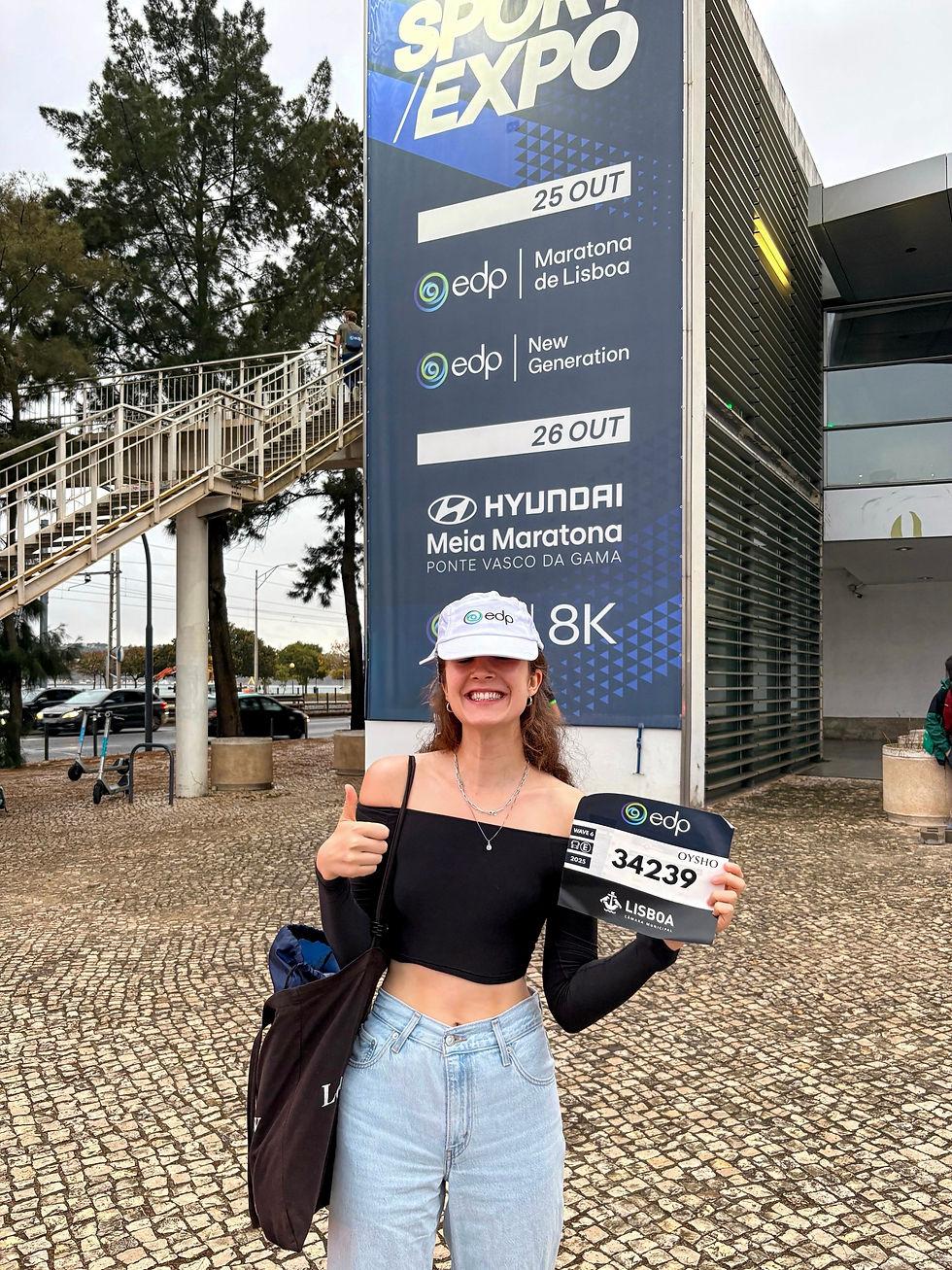
After completing that half-marathon in 2024, my body was asking for recovery. A friend suggested I try a Pilates class in Toronto—just once, she said, to help my muscles heal. I went reluctantly, expecting an easy stretch session, something to fill the time while my running legs recovered.
But something unexpected happened in that hour of controlled movement and intentional breath. For the first time in months, I wasn't chasing anything. I was simply present.
The Slow Unravelling
I kept going back. Week after week, studio after studio. As I travelled—carrying my running shoes through Canada, Germany, Greece, Italy, and eventually Portugal—I found myself seeking out Pilates studios the way I once sought out running routes. Six months passed, and I realized I was attending classes more regularly than I was running.
It took me that long to understand what my body knew long before my mind would listen: we break not because we're weak, but because we've forgotten that strength includes the ability to yield and bend.
I had learned to run again after my assault, yes. I had learned to run with community, with joy, with purpose. But I had only traded one kind of running for another—swapping panic for productivity, fear for forward motion. Even in healing, I was still fleeing—from stillness, from the vulnerability of a body at rest, from the unbearable closeness of sitting with myself when movement could no longer save me.
Pilates forced me to confront what I'd been avoiding: that you can heal from trauma and still be running from it. That you can find strength and still be afraid of softness. That you can reclaim your body and still not fully trust it.
The Necessary Collapse
I've come to believe that we often need to reach one extreme to find our way to balance. I had to push myself to injury before I could understand rest. I had to exhaust every method of moving forward before I could discover the power of slowing down.
There's something almost necessary about that breaking point—the moment when your current path becomes unsustainable, when your body and mind finally say, "enough." My knee injury was one breaking point. But this was another, quieter one: the realization that I had traded one form of running for another, that I had simply found a more socially acceptable way to avoid standing still.
Learning to Breathe Again
By the time I reached Portugal, something had shifted irrevocably. I wasn't just attending Pilates classes anymore—I was arriving early, staying late, asking questions, feeling each breath as though learning to breathe for the first time. I was captivated by the paradox: how the smallest, most precise movements could dismantle what years of running couldn't touch, how stillness could demand more bravery than speed ever did.
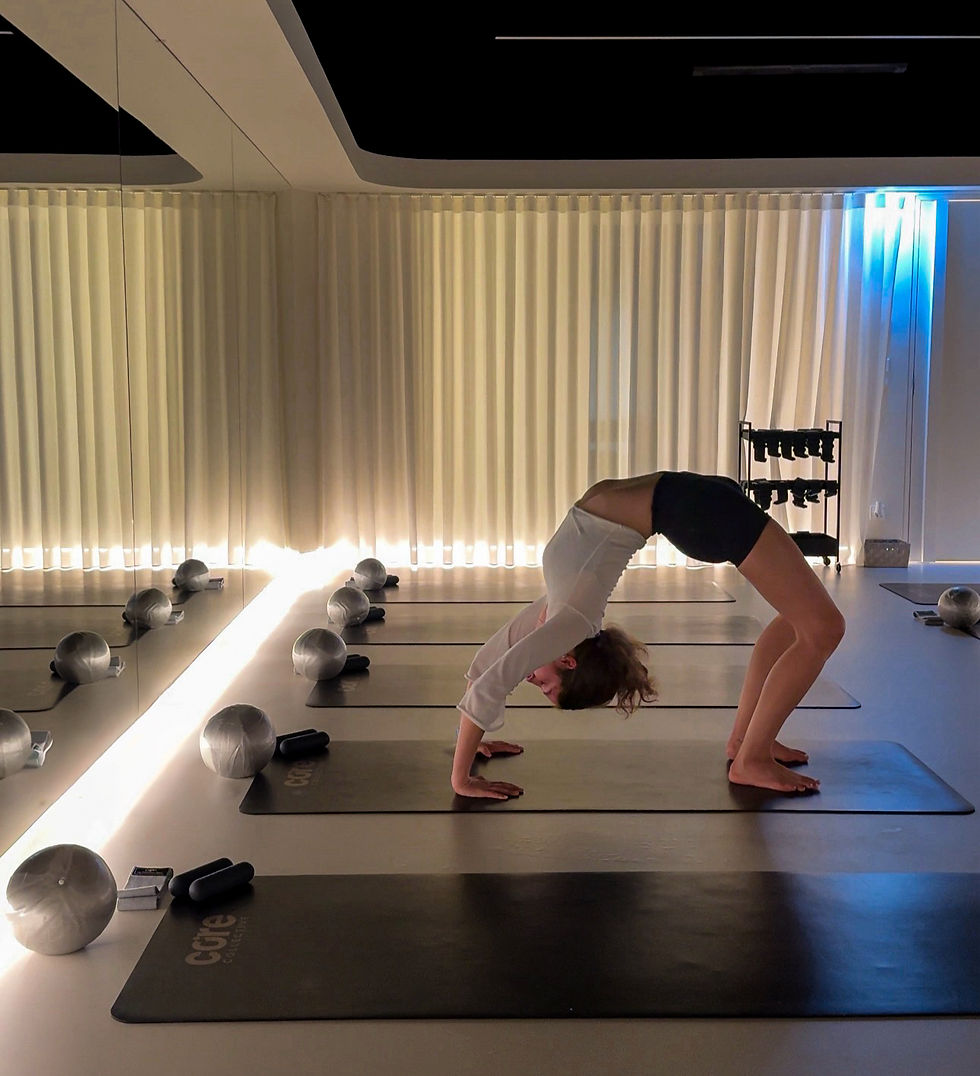
That's when I decided to get certified. Not just to teach, but to learn. To understand this practice that was unravelling years of tension, I didn't even know I was holding.
Every day, I learned not just about anatomy and alignment, but about the philosophy of the practice—centring, concentration, control, precision, breath, and flow. I realized these weren't just principles for movement; they were principles for living.
Reclaiming Tenderness
That's when I found Pilates—or maybe it found me. I had spent months believing that intensity was the only path to healing, but my body was asking for something gentler. I wasn't alone in needing to reframe my relationship with movement—many people are discovering that sustainable fitness starts with gentleness, not punishment.
Where running had taught me to endure, Pilates taught me to inhabit. Where running proved I could be powerful, Pilates revealed I could be soft—and that softness might be the harder thing to hold. It required me to feel: the expansion of ribs with breath I'd been rationing for years, the awakening of muscles I'd numbed, the deliberate slowness that felt more vulnerable than any sprint.
The Courage Slowness Demands
Here's what I've learned about slowing down: it's not the opposite of strength. It's the deepest kind of strength there is. Gentle approaches to fitness and wellness aren't about doing less—they're about honouring what your body actually needs.
When you run, you can outpace your thoughts. When you move slowly, with intention, every thought catches up. Every emotion surfaces. Every place where you're still holding trauma in your tissues becomes impossible to ignore. That's why slowing down is terrifying. And that's why it's necessary.
Sometimes we choose intensity because it feels like progress. Because doing more, going faster, pushing harder is the only language we know for "I'm trying." But I've discovered that the most profound changes happen in the smallest, slowest movements. The ones that require you to pay attention. The ones you can't rush through. The ones that ask you to trust your body instead of controlling it.
The Stories We Carry to The Mat
As I began teaching—first in Lisbon, then now in Germany—I watched this truth play out in student after student. The ones who came to Pilates after years of high-intensity training, their bodies breaking down from relentless impact. The ones who arrived with nervous systems so dysregulated they couldn't lie still on the mat. The ones who, like me, had spent so long running from something that they'd forgotten how to simply be.
One woman told me after class, 'I've been going so fast for so long, I forgot I was allowed to slow down.' Her words landed like recognition. We live in a world that worships speed, that equates intensity with dedication, that mistakes the grind for growth. In that world, slowing down feels like surrender. But what if it's actually the most courageous act of all?
What Both Practices Taught Me
Healing asks us to hold impossible things at once. To be both fierce and yielding. To move and to stay. To build ourselves up and break ourselves open.
My running shoes still carry me through unfamiliar streets. But now my mat holds me too, teaching me that stillness can be harder than any distance.
Both practices have taught me about coming home to my body. Running showed me I could reclaim it, that I could be powerful and free. Pilates showed me I could inhabit it, that I could be gentle and present. Together, they're teaching me that home isn't a place you arrive at once—it's a practice you return to, again and again, in different ways, at different speeds.
Staying Instead of Running
A year ago, I wrote about finding myself again. Today, I understand that finding yourself isn't an arrival—it's an archaeology of the self, each excavation unearthing what you buried to survive.
Sometimes you have to shatter into a thousand pieces to realize you were never meant to stay intact—that breaking open is how transformation begins. Sometimes you have to run yourself ragged chasing every horizon before you understand that what you're seeking has been waiting in the stillness all along.
I used to run to outpace my pain. Now I know that some wounds don't heal through distance—they heal through devotion, through the slow, deliberate work of breathing life back into what trauma tried to extinguish. The body I weaponized against myself, I now tend with care.
Running returned my power. Pilates returned my permission to be soft. But the real revelation was this: I was never choosing between strength and surrender—I was learning they're the same muscle, flexed in different directions.
One year later, I'm still moving. But I've finally grasped that the most radical movement isn't velocity—it's staying. It's planting your feet in the wreckage and feeling everything that rises, discovering that you're not just strong enough to survive the stillness—you're brave enough to let it remake you.
And in that staying—in that deliberate slowness, in that choice to break open rather than shut down—I discovered something unexpected. Wholeness was never about reassembling the fragments, never about becoming unbroken again. It was about the courage to hold both truths at once: that I could be fractured and complete, wounded and whole, all in the same breath.
Comments